

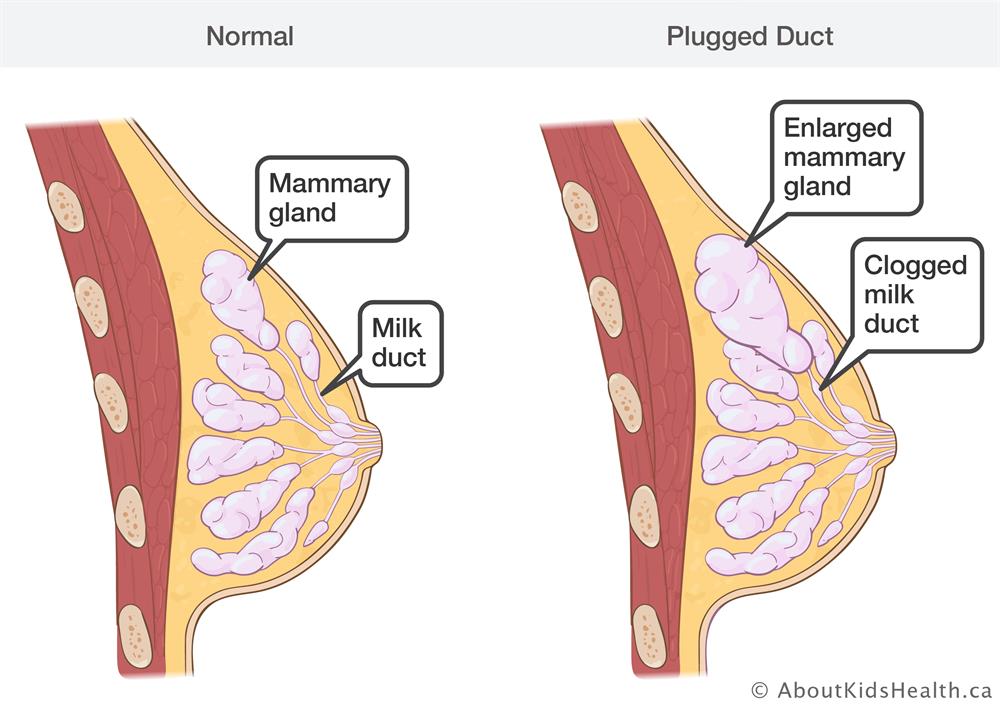
What Is a Plugged Duct?
A plugged duct usually feels like a tender lump in the breast. It may be warm and have some redness over the lump.
Plugged ducts can happen when milk is not drained well from the breast. This can happen when there is too much pressure inside the breast.
Symptoms of a clogged milk duct
Clogged or plugged milk ducts happen when a milk duct in your breast gets blocked or otherwise has poor drainage. You might experience one if your breast isn’t completely emptied after a feed, if your baby skips a feed, or if you’re under stress — which a lot of new moms are, if we’re honest.
Symptoms can come on slowly and generally affect just one breast.
- a lump in one area of your breast
- engorgement around the lump
- pain or swelling near the lump
- discomfort that subsides after feeding/pumping
- pain during letdown
- milk plug/blister (bleb) at the opening of your nipple
- movement of the lump over time
- It’s also common to see a temporary decrease in your supply when you have a clog.
- You may even see thickened or fatty milk when you express — it may look like strings or grains.
Treatment for a Plugged Duct
Breastfeed more frequently, starting with the breast with the lump. It may help to have your baby’s nose or chin pointing to the blockage.
- Change position of baby during feedings to ensure drainage of all the milk ducts.
- Use warm, wet washcloths on the area for a few minutes.
- Massage breast during the feeding or in the shower. Try pressing behind the lump and massage toward the nipple. You can also soak the breast in a bowl of warm water.
- After breastfeeding, express some milk by hand or pump to help milk drainage.
- Take care of yourself; get rest, eat and drink fluids.
You should call a certified lactation consultant or health professional trained in lactation support if you are not improving within 24 hours.
Plugged ducts can lead to mastitis. If you are having flu-like symptoms (achy, fever, chills) and a red, hot area over the lump or red streaking, call your doctor to get antibiotics.
Mastitis affects up to 1 out of 10 breastfeeding women, so you’re far from alone. If you’ve had it before, you’re more likely to get it again. Untreated mastitis may lead to a collection of pus — an abscess — that requires surgical drainage.
 Modern Momma Ph