

Mastitis is inflammation (swelling) in the breast, which is usually caused by an infection. It is most common when a woman is breastfeeding, but it can happen at other times as well.
A clogged milk duct that doesn’t let milk fully drain from the breast, or breaks in the skin of the nipple can lead to infection. This causes the body’s white blood cells to release substances to fight the infection, which can lead to swelling and increased blood flow. The infected part of the breast may become swollen, painful, red, and warm to the touch. Mastitis can also cause fever and a headache, or general flu-like symptoms.
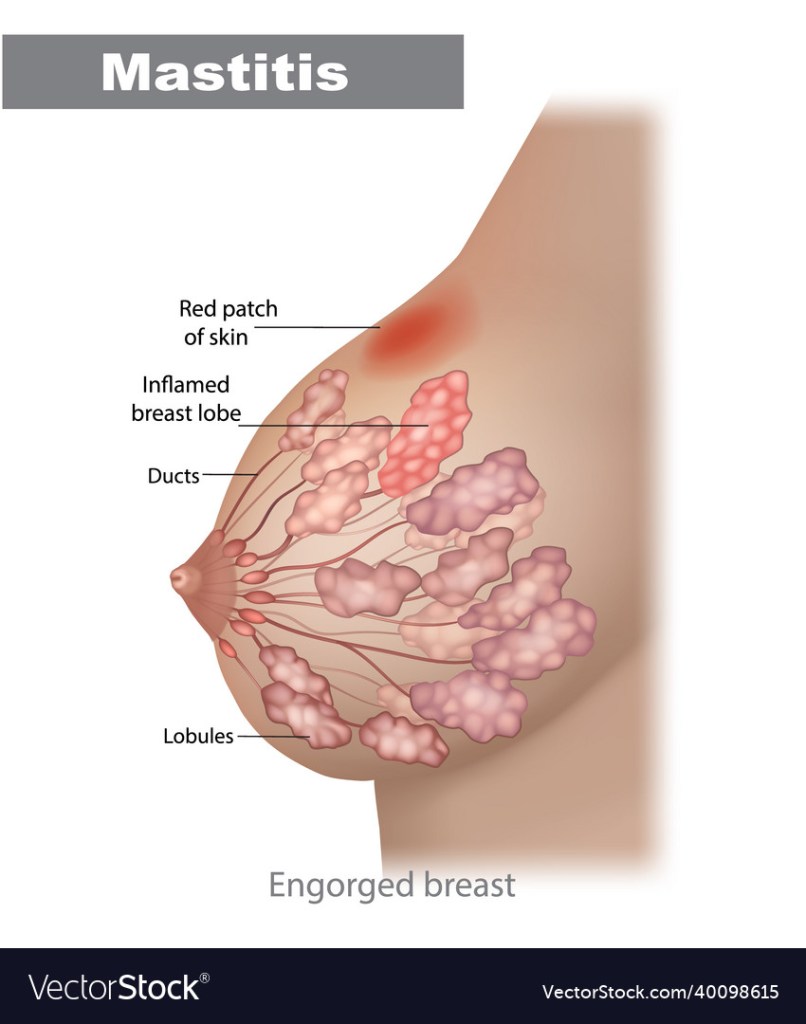
Diagnosis of mastitis
Mastitis can often be diagnosed based on symptoms and the results of a breast exam. It usually affects only one breast.
How does mastitis affect your risk of breast cancer?
Having mastitis does not raise your risk of developing breast cancer.
Treatment of mastitis
Mastitis is typically treated with antibiotics, along with emptying the milk from the breast. In some cases, a breast abscess (a collection of pus) may form. Abscesses are treated by draining the pus, either by surgery or by aspiration (using a thin, hollow needle, often guided by ultrasound), and then antibiotics.
Inflammatory breast cancer has symptoms that are a lot like mastitis and can be mistaken for an infection. If you’ve been diagnosed with mastitis and antibiotic treatment doesn’t help within a week or so, you might need a skin biopsy to be sure it’s not cancer. Inflammatory breast cancer can spread quickly, so don’t put off going back to the doctor if you still have symptoms after antibiotic treatment.
 Modern Momma Ph